
WELCOME BONUS 300%
UP TO €2000 + 100
FREE SPINS
UP TO €2000 + 100
FREE SPINS
Home → Games
Casino games at Vulkan Vegas Casinos
Video Poker: check payout table before betting
The Video Poker Jacks or Better 9/6 variant offers a Return to Player rate of 99.54 percent with an optimal strategy. This performance contrasts sharply with the Jacks or Better 8/5 version, which drops significantly to 97.29 percent RTP due to reduced payouts for Full House and Flush. The lower return on the 8/5 machine increases the house edge to 2.71 percent, costing players substantially more over time. Players must verify the paytable before starting to avoid this costly difference.
A reduction in payout units from 9 to 8 for Full House and 6 to 5 for Flush reduces the RTP by 2.25 percentage points compared to the full pay version. The 8/5 game pays 800 for Royal Flush and 50 for Straight Flush, but the reduced straight and flush returns are the primary drivers of the lower value. In contrast, the 9/6 version requires a maximum bet of 5 coins to unlock the 4000 coin Royal Flush bonus. Missing this requirement can further diminish actual returns despite the favorable base RTP.
Intermediate paytables such as 9/5 and 8/6 offer RTPs of 98.45 percent and 98.39 percent respectively, falling between the two extremes. The 7/5 variant performs even worse at 96.15 percent, while the 6/5 version hits a low of 94.99 percent RTP. These figures demonstrate that small changes in specific hand payouts drastically alter the long-term expected value. Analyzing these specific numbers is essential for selecting the most profitable video poker machine available.
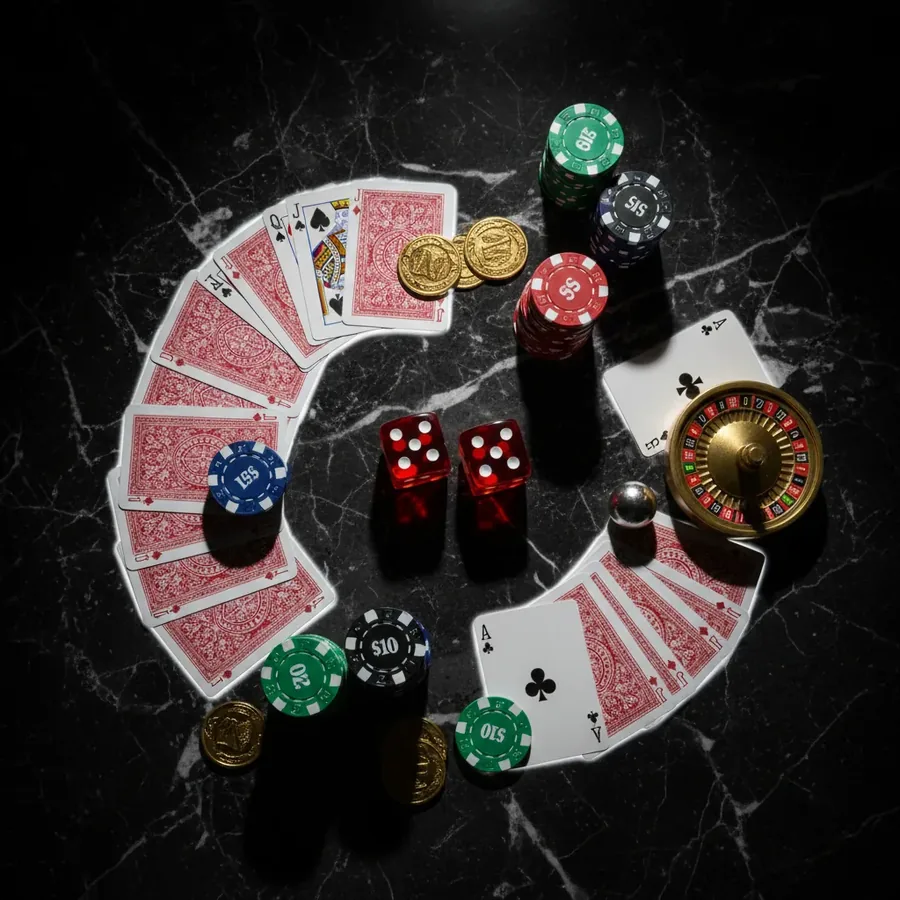
Declining Insurance: The Most Common Blackjack Mistake
Blackjack Insurance is a side bet offered when the dealer shows an Ace, allowing players to wager up to 50 percent of their original stake. This separate proposition pays 2:1 if the dealer has a natural blackjack, but it carries a house edge of 7.47 percent. This high cost makes insurance a statistically poor decision for the average player using basic strategy. Accepting this bet significantly erodes the overall profitability of the blackjack session.
Standard basic strategy dictates that players should always decline insurance unless they are counting cards with a true count of plus 3 or higher. For a single-deck game, the house advantage on insurance alone is approximately 5.88 percent, which remains prohibitively expensive. Comparing this to the main game's edge highlights why this side bet is considered a trap for untrained players. The potential payout of 2:1 does not compensate for the probability of the dealer holding a ten-value card.
The insurance wager acts independently of the main hand outcome, meaning losses on this bet do not affect the primary blackjack result. While it might seem like a hedge against a dealer blackjack, the mathematical expectation is negative for almost all scenarios. Relying on this bet introduces a 7.47 percent house edge where none existed in the base game rules. Avoiding insurance preserves the lower house edge inherent in standard blackjack play.
Card counters may find value in taking insurance only when the deck composition heavily favors ten-value cards, indicated by a true count of plus 3. Outside of this specific counting scenario, the bet remains a negative expectation proposition. The 50 percent max wager limit restricts exposure but does not improve the underlying odds.明智的 players stick to the main game strategy to minimize losses.
Push in Blackjack: the bet returns
A push occurs in blackjack when the player and the dealer achieve the same final hand value, resulting in the original bet being returned. This outcome means no money changes hands, and the player neither wins nor loses on that specific hand. Pushes are a standard feature of blackjack rules that protect the player from losing on tied scores. They effectively pause the transaction until the next deal begins.
Unlike other casino games where ties might result in a loss or a special payout, blackjack pushes simply nullify the round. This rule contributes to the overall house edge calculations by removing certain losing probabilities from the dealer's favor. However, some variants treat specific ties differently, so checking the rules is crucial. Understanding this mechanic helps players manage their bankroll expectations during sessions.
The frequency of pushes depends on the number of decks and specific rules like resplitting aces or doubling after splits. Games with fewer decks often see slightly different push frequencies due to card removal effects. Despite these variations, the core principle remains: the stake is safe on a tie. This protection is one reason blackjack offers some of the lowest house edges in the casino.
Soft 17: the Ace counts 11 or 1
A soft 17 hand contains an Ace valued at 11 plus other cards summing to 6, allowing flexibility without busting if another card is drawn. The rule regarding whether the dealer hits or stands on soft 17 significantly impacts the house edge. When the dealer hits soft 17, the house edge increases by 0.22 percentage points compared to standing. This rule change favors the casino by giving the dealer a chance to improve a weak hand.
Standing on soft 17 is generally more favorable for players as it limits the dealer's ability to recover from a weak total. The additional 0.22 percent edge for hitting soft 17 represents a noticeable increase in the casino's advantage over time. Players should seek tables where the dealer stands on soft 17 to maximize their theoretical return. This single rule variation can alter the long-term expected value of the game.
Other rule modifications like resplitting aces or doubling after split also influence the overall edge, with some improving player odds. For instance, resplitting aces improves RTP by 0.08 percentage points, while doubling after split adds 0.14 percentage points. However, the dealer hitting soft 17 remains a dominant negative factor. Combining these rules creates a complex matrix of advantages that players must navigate.
What Doesn't Count Towards Bonus Wagering on Table Games?
Table games contribute only 10 percent towards the bonus wagering requirement, while slots contribute 100 percent. This disparity means that for every 100 euros wagered on table games, only 10 euros count toward clearing the bonus. Players relying on table games to meet the 300 percent welcome bonus terms will need to wager significantly more than those playing slots. The 10 percent contribution rate severely slows down the clearance process.
The 300 percent welcome bonus up to 2,000 euros requires substantial turnover to unlock withdrawals. With table games contributing just 10 percent, the effective wagering burden is ten times higher than on slots. For example, wagering 1,000 euros on blackjack only clears 100 euros of the requirement. This structure incentivizes players to use slots, which have a much faster contribution rate. Ignoring this ratio can lead to failed withdrawal attempts.
Slots are the most efficient way to clear the wagering requirement due to their 100 percent contribution status. In contrast, the low contribution of table games makes them inefficient for bonus conversion. Players must calculate their total needed wagers based on the 10 percent rate if they prefer table games. Failing to account for this difference can result in unexpected restrictions on bonus funds. Always check the specific contribution percentages before playing.
Game categories at a glance
| Category | Examples | Stakes From | Highlight |
|---|---|---|---|
| Slots | Book of Demi Gods 2, Sun of Egypt 3, Sun of Fortune | 0,10 EUR | thousands of titles |
| Table games | Roulette, Blackjack, Baccarat | 0,50 EUR | classic rules |
| Live casino | Dream Catcher, Casino Hold'em | 0,20 EUR | real dealers |
| Jackpot games | Mega Moolah, Divine Fortune, Age of the Gods | 0,20 EUR | progressive pools |
| Instant games | Aviator, Plinko, Mines | 0,10 EUR | fast rounds |
| Video poker | Jacks or Better, Deuces Wild | 0,25 EUR | strategy based |
37 vs. 38 Sectors: What the Double Zero Costs
European Roulette features a single zero on its 37 sectors, establishing a house edge of 2.70% for all wagers placed on the wheel. This mathematical advantage remains constant regardless of whether the player bets on Red/Black or specific numbers like Straight 35:1. The single-zero design ensures that the casino retains only 2.70% of total stakes over time.
American Roulette introduces a double zero, creating 38 sectors and doubling the house edge to 5.26% for identical payout structures such as Split 17:1 or Dozen 2:1. This additional sector significantly increases the casino's retention rate compared to the European variant. Players face nearly double the theoretical loss per unit wagered on standard outside bets.
The Five Number Bet in American Roulette covers sectors 0, 00, 1, 2, and 3 with a payout of 6:1, resulting in a steep house edge of 7.89%. This specific wager has no equivalent in European games and represents the worst value on the American wheel. It costs players an additional 2.63% compared to other American bets due to the inflated risk.
What doesn't count: bets over 5 EUR
Table games contribute only 10% toward the wagering requirements for the 300% welcome bonus up to €2,000 offered by Vulkan Vegas Casinos. This low contribution rate drastically slows down the clearance process for players who prefer card or roulette games over slots. A €100 bet on Blackjack adds merely €10 to the required turnover total.
In contrast, Slots contribute 100% to the same wagering requirement, allowing players to clear the bonus much faster through high-variance slot play. The disparity between game types means that choosing table games extends the time needed to withdraw winnings significantly. Players must generate ten times more actual betting volume on tables to match slot progress.
Vulkan Vegas Casinos restricts the bonus utility for table game enthusiasts by limiting their impact on the overall turnover calculation. Since the bonus caps at €2,000, clearing it via table games requires generating €20,000 in eligible bets at 10% contribution. This structure effectively discourages high-stakes table play during the bonus period.
Split 17:1 and Corner 8:1 in Payout Comparison
European Roulette offers a Split bet paying 17:1, covering two adjacent numbers with a house edge anchored by the single zero sector. This payout ratio provides a moderate risk-reward balance compared to straight bets paying 35:1. The 2.70% house edge ensures consistent long-term returns for the operator across all wheel positions.
Corner bets in European Roulette pay 8:1 for four adjacent numbers, maintaining the same 2.70% house edge inherent to the 37-sector wheel. This payout is significantly lower than the Straight 35:1 but offers higher probability of hitting a winning number. The mathematical expectation remains uniform across all inside and outside wagers on this wheel type.
American Roulette maintains identical payout ratios like Split 17:1 and Corner 8:1 despite having 38 sectors instead of 37. This discrepancy increases the house edge to 5.26%, effectively halving the player's expected return compared to the European version. The unchanged payouts combined with extra zeros create a substantially less favorable environment for gamblers.
Game Shows: sectors, multipliers, and bet ranges
Table games generally offer lower contribution rates to bonuses, prioritizing slot diversity for faster turnover clearance. Players seeking fast bonus completion should prioritize slots over live dealer formats.
Video Poker variants such as Jacks or Better 9/6 provide an RTP of 99.54% with optimal strategy, offering superior returns compared to most slot machines. However, these table-adjacent games still fall under the 10% contribution category for the welcome bonus up to €2,000. This limitation reduces the effective value of playing high-RTP video poker while utilizing promotional funds.
Craps Free Odds bets carry a 0.00% house edge when taken behind Pass Line wagers, representing the best mathematical value in any casino. Despite this perfect RTP, Craps contributes only 10% to the wagering requirement, slowing bonus conversion significantly. Players must wager massive amounts to clear the €2,000 cap using low-edge table games.
Sic Bo Pays from 1:1 to 180:1
Sic Bo Special Bets range from Single Number paying 1:1 to Specific Triple paying 180:1, with house edges varying between 7.87% and 18.52%. The Specific Double bet carries the worst odds at 18.52% house edge, making it the least favorable option on the board. Players should avoid high-payout special bets to minimize long-term losses on this dice game.
Small and Big bets in Sic Bo pay 1:1 with a house edge of 2.78% under Atlantic City rules, offering the best value on the table. These bets cover sums of 4-10 and 11-17 respectively, excluding triples which result in automatic losses. The 97.22% RTP makes them comparable to European Roulette in terms of statistical fairness.
Any Triple bets pay 30:1 with a house edge of 13.89%, sitting between the best and worst special wares in Sic Bo. This middle-tier risk profile appeals to players seeking higher payouts without accepting the maximum 18.52% edge of Specific Doubles. The variance remains high, requiring careful bankroll management during gameplay sessions.
Dozen 2:1: Twelve Numbers, One Third Coverage
The European roulette wheel offers a Dozen payout of 2:1 for covering twelve specific numbers out of the thirty-seven sectors. This ratio matches the Split payout of 17:1 and the Street payout of 11:1, but provides significantly broader coverage than corner bets which pay only 8:1. Players betting on dozens face a constant house edge of 2.70 percent across all even-money options like Red or Black.
In contrast, the American roulette variant with thirty-eight sectors maintains the same 2:1 payout for dozens while doubling the house advantage to 5.26 percent due to the additional zero slot. The Five Number Bet on the American wheel pays 6:1 but carries a severe 7.89 percent edge, making it a much less efficient wager than standard dozen bets. This structural difference highlights why the European format remains superior for consistent long-term returns.
The payout structure ensures that a winning dozen bet returns twice the stake, identical to Column bets which also pay 2:1. However, the presence of the single zero in European wheels keeps the theoretical return at 97.30 percent, whereas the American version drops to 94.74 percent. Bettors must account for this mathematical variance when selecting their preferred table configuration.
Jacks or Better: Check Payout Table Before Betting
Video Poker Jacks or Better 9/6 tables deliver an RTP of 99.54 percent with a minimal house edge of 0.46 percent when played with optimal strategy. This full-pay machine pays 9 coins for a Full House and 6 coins for a Flush, requiring a maximum five-coin bet to unlock the Royal Flush bonus of 4000 credits. Such high returns are rare compared to other video poker variants available in online casinos.
Switching to the Jacks or Better 8/5 variant reduces the RTP to 97.29 percent and increases the house edge to 2.71 percent due to lower payouts for Full House and Flush. A reduction of just two payment units costs approximately 2.25 percentage points in return, demonstrating the sensitivity of video poker mathematics to paytables. Intermediate versions like 9/5 offer 98.45 percent RTP, sitting between the best and worst configurations.
Players must verify the paytable before engaging, as worse combinations such as 7/5 drop the RTP to 96.15 percent and 6/5 falls further to 94.99 percent. The standard deviation of 4.42 indicates significant volatility even on favorable machines, meaning short-term results will vary widely from the theoretical average. Checking the specific payout schedule is essential to avoid inferior games that erode bankroll faster.
Baccarat commission: 5 percent on each Banker win
The Baccarat Banker bet features a house edge of only 1.06 percent and an RTP of 98.94 percent across eight-deck shoes. This statistical advantage is maintained by applying a 5 percent commission on all winning Banker wagers, effectively reducing the payout to 0.95:1 instead of the standard 1:1. The commission compensates for the positional benefit the Banker holds during the third-card draw rules.
This 0.95:1 effective payout contrasts sharply with the Player bet, which pays 1:1 without commission but carries a slightly higher house edge of 1.24 percent. The Tie bet, often tempting due to its high multiplier, suffers from a massive house edge that makes it mathematically unsound for serious players. Focusing on the Banker hand remains the most reliable strategy for minimizing losses over time.
The standard deviation of 0.93 for the Banker bet indicates lower volatility compared to other casino table games, providing more stable session outcomes. While the 5 percent fee reduces immediate profits, the underlying probability favors the Banker position enough to offset the cost. Analyzing the net result after commission reveals why this option consistently ranks among the best value propositions in baccarat.
En Prison on Zero Gives Second Chance
European roulette with thirty-seven sectors allows players to place outside bets like Red or Black that pay 1:1 on winning spins. When the ball lands on the single zero, some variants apply the En Prison rule, which retains the original wager for the next round rather than immediately forfeiting it. This mechanic effectively halves the house edge on these specific bets compared to standard European rules.
Without the En Prison feature, a zero loss on a Red bet results in a complete forfeiture of the stake, contributing to the 2.70 percent overall house edge. The rule transforms a total loss into a conditional chance, improving the expected value for players betting on even-money options. This adjustment is absent in American roulette, where the double zero creates a 5.26 percent disadvantage regardless of special rules.
The mathematical impact of En Prison aligns closer to La Partage, which refunds half the bet immediately upon a zero outcome. Both mechanisms reduce the effective house edge on even-money bets to approximately 1.35 percent, significantly better than the baseline 2.70 percent. Players seeking lower variance should prioritize tables offering these specific zero-handling protocols.
Columns and Dozens Pay 2:1 in Roulette
Roulette columns and dozens both offer a payout ratio of 2:1, covering twelve numbers out of the thirty-seven available on a European wheel. This payout structure is identical to the Split bet paying 17:1 and the Street bet paying 11:1, though column and dozen bets cover a much larger area of the layout. The consistency in payout ratios helps players calculate potential returns quickly across different bet types.
Comparing these to corner bets which pay 8:1 or six-line bets paying 5:1 reveals a clear hierarchy of risk versus reward in roulette. The Straight bet offers the highest individual payout at 35:1 but covers only one number, creating extreme volatility. Columns and dozens strike a middle ground, providing moderate returns with higher frequency wins than straight-up wagers.
The house edge remains fixed at 2.70 percent for all these bets in European roulette, regardless of the payout multiplier used. In American roulette, the same 2:1 payout applies to columns and dozens, but the house edge rises to 5.26 percent due to the extra zero. Understanding this static edge helps players recognize that no betting system can overcome the mathematical disadvantage inherent in the game design.
Contact
Live - online chat
Banking









Providers












Vulkan Vegas Casino 2026